How To Use This Self‑Check
This simple self-check helps you see how well your body is coping with the effects of desk work right now.
You will check key movements related to common desk-worker concerns, including neck and shoulder tension, upper-back stiffness, tight hips, and lower-back discomfort.
How it works
- Watch the short video for each movement.
- Try the movement yourself at home—no equipment required.
- Score each movement using the traffic-light system: Green, Amber, or Red.
- Write down your scores so you can see which areas may deserve the most attention.
Move slowly and stay within a comfortable range. Do not force or push through pain.
If you experience sharp, pinching, worsening, or otherwise concerning pain, stop the movement and mark it as Red. If you are unsure, choose the more cautious score.
Movement 1: Deep Squat Assessment
Score yourself
• GREEN — Moving well
You can complete the movement comfortably, with good control and without obvious restriction compared with the demonstration
• AMBER – Some stiffness or restriction
You can complete the movement, but it feels stiff, tight, uneven from one side to the other, or more limited than the demonstration.
• RED – Stop and take care
You cannot comfortably complete the movement, experience pain or concerning symptoms, or notice a major restriction or difference between sides.
What We Are Looking For
We’re looking for the ability to sink into a squat with heels down, chest tall, and knees tracking over toes.
This shows ankle mobility, hip mobility, and thoracic extension. If someone struggles, it often points to tight ankles, restricted hips, or limited core stability.
Postural Cues
The deep squat shows us how your hips, knees, ankles, and upper back all work together. We’re not looking for a “perfect” squat—it’s not a pass or fail. Instead, it gives us a snapshot of how your body moves right now.
If your heels lift, your knees collapse, or your chest tips forward, it tells us which areas might need more strength or mobility. From there, we can tailor your training to build a safer and stronger squat pattern.
Movement 2: Toe Touch
Score yourself
• GREEN — Moving well
You can complete the movement comfortably, with good control and without obvious restriction compared with the demonstration
• AMBER – Some stiffness or restriction
You can complete the movement, but it feels stiff, tight, uneven from one side to the other, or more limited than the demonstration.
• RED – Stop and take care
You cannot comfortably complete the movement, experience pain or concerning symptoms, or notice a major restriction or difference between sides.
What We Are Looking For
We’re assessing how easily the client can hinge from the hips and reach toward the toes without rounding excessively through the spine.
It gives insight into hamstring length, lower back mobility, and pelvic control. Difficulty here usually shows tight hamstrings or poor hip hinge mechanics.
Postural Cues
The toe touch checks how your hamstrings, hips, and lower back are working together. Again, this isn’t about passing or failing—it just shows us where you’re at today.
If you struggle to reach the floor or your back rounds too much, it points us toward improving hamstring flexibility, hip movement, and core control. That way, we can program the right drills to help you move more freely and reduce tension.
Movement 3: 90/90 Hip Rotation Hold
Score yourself
• GREEN — Moving well
You can complete the movement comfortably, with good control and without obvious restriction compared with the demonstration
• AMBER – Some stiffness or restriction
You can complete the movement, but it feels stiff, tight, uneven from one side to the other, or more limited than the demonstration.
• RED – Stop and take care
You cannot comfortably complete the movement, experience pain or concerning symptoms, or notice a major restriction or difference between sides.
What We Are Looking For
We’re checking internal and external hip rotation range in both legs while seated. This test highlights hip joint mobility and balance between sides.
Limited range or discomfort can reveal restrictions that might affect squatting, lunging, and athletic movements.
Postural Cues
The 90/90 hip test tells us how much freedom of movement you’ve got through your hip joints, both rotating in and out. There’s no pass or fail here—it simply shows us if one side is tighter or weaker than the other.
That information helps us pick the right hip mobility and stability exercises, so you can squat, lunge, and move with less restriction and lower injury risk.
Movement 4: Overhead Reach
Score yourself
• GREEN — Moving well
You can complete the movement comfortably, with good control and without obvious restriction compared with the demonstration
• AMBER – Some stiffness or restriction
You can complete the movement, but it feels stiff, tight, uneven from one side to the other, or more limited than the demonstration.
• RED – Stop and take care
You cannot comfortably complete the movement, experience pain or concerning symptoms, or notice a major restriction or difference between sides.
What We Are Looking For
We’re looking at overhead shoulder mobility and ribcage positioning as the client raises arms against the wall.
Ideally, arms should reach overhead without ribs flaring or lower back arching. Limitations here usually point to tight lats, restricted thoracic spine, or poor core control.
Postural Cues
The overhead lat test looks at how well your shoulders and upper back can move when your arms reach overhead. It’s not about “good” or “bad,” just about where you are today.
If your ribs flare, back arches, or arms don’t quite get overhead, it tells us your lats, shoulders, or spine might need more mobility and control.
From there, we can program stretches and strength work to keep your shoulders healthy and improve your posture.
Movement 5: Thoracic Rotation
Score yourself
• GREEN — Moving well
You can complete the movement comfortably, with good control and without obvious restriction compared with the demonstration
• AMBER – Some stiffness or restriction
You can complete the movement, but it feels stiff, tight, uneven from one side to the other, or more limited than the demonstration.
• RED – Stop and take care
You cannot comfortably complete the movement, experience pain or concerning symptoms, or notice a major restriction or difference between sides.
What We Are Looking For
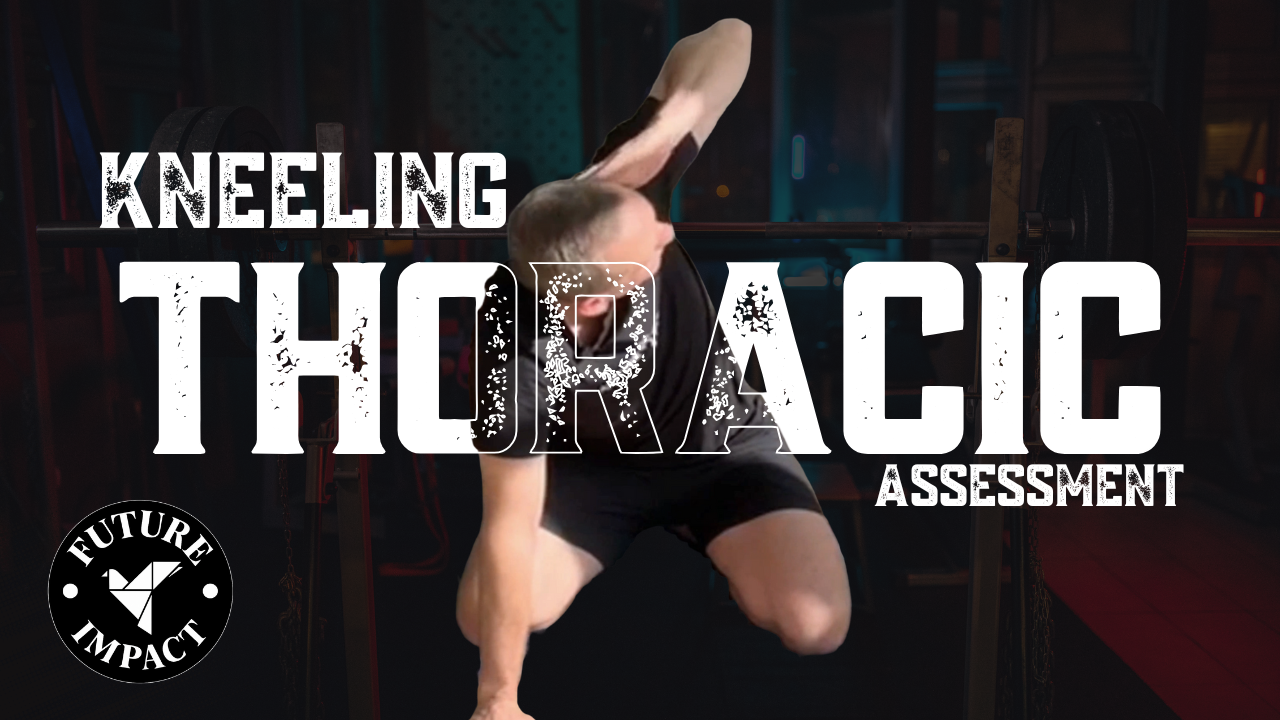
Here we want to assess your ability to rotate your thoracic spine but also how your rib cage and trunk move.
Poor thoracic rotation is common in deskbound individuals who never expose their spine and trunk to different positions. This can contribute to neck stiffness, scapula weakness, shoulder dysfunction and lower back overload. Improving thoracic rotation helps restore efficient movement, posture and rotational capacity.
The following compensations we will note:
* Pelvis rotating or shifting
* Excessive lumbar extension
* Supporting shoulder collapse (could be a sign of a lack of scapula strength)
* Rib flare or loss of trunk control
Postural Cues
Setup:
* Kneel on all fours with knees under your hips and support hands under your shoulders
* You can kneel on your heels if it’s comfortable but it’s not essential. Just ensure your hips don’t move throughout the assessment.
* Place one hand lightly behind ear with your elbow out to the side.
* Maintain a neutral spine and square hips throughout the whole movement
Movement:
1. Rotate elbow of the bent arm down towards supporting arm elbow pit/armpit
2. Rotate elbow upward towards ceiling while keeping hips stable. Return to starting position and repeat for the desired number of reps
Key Coaching Cues:
* “Rotate through the ribs, not the lower back”
* “Lead with the elbow”
* “Breathe out slightly as you rotate down”
Find the section below that best matches your scores.
What To Do If You Have AMBER Or RED Scores
If you’ve got two or more AMBER scores or one or more RED scores, it may be a sign that certain areas of your body would benefit from more focused mobility work.
That does not mean you are broken or that something is necessarily seriously wrong. It simply means that stiffness, discomfort, reduced movement confidence, or differences between sides may be making everyday desk work harder on your body.
The next step is to use a simple, structured plan that helps you focus on the areas most likely to benefit from regular movement.
Want help deciding where to start?
Click below to learn more about Pain Free Desk Worker—our guided monthly mobility membership for people who want to move more comfortably, reduce common desk-related stiffness, and build a routine that fits around work.
Inside, you will get:
- A simple mobility plan to help you focus on your main areas of stiffness and restriction
- Clear, detailed exercise videos and explanations
- Five practical movements updated each month
- Options to adapt movements to your current ability
- The ability to contact James and Troy for guidance and general questions
[See If Pain Free Desk Worker Is Right for Me]
If Your Scores Are GREEN — or You Have Just One AMBER Score and No RED Scores
Good news—you are moving well. Here is how to keep it that way
Your movement currently looks relatively comfortable and unrestricted.
That does not mean desk work has no effect on your body, but it suggests you are in a strong position to maintain your mobility and prevent stiffness from building up over time.
A short, regular mobility routine can help you:
- Maintain comfortable movement around your desk-based work
- Break up long periods of sitting
- Stay ahead of common neck, shoulder, back, and hip stiffness
- Build a movement habit that supports you long term
Pain Free Desk Worker is not only for people who already feel stiff or sore. It is also for desk workers who want a simple plan to maintain mobility and keep moving well.
[See If Pain Free Desk Worker Is Right for Me]
Important: This self-check is for educational purposes only and is not a medical assessment or diagnosis. If you have severe, persistent, worsening, or unexplained pain, or symptoms such as numbness, weakness, dizziness, loss of balance, or symptoms following an injury, please speak with an appropriately qualified healthcare professional before starting an exercise program.
Not sure whether the membership is suitable for you? Send us a message and we’ll help you decide